
Magnetic materials
-
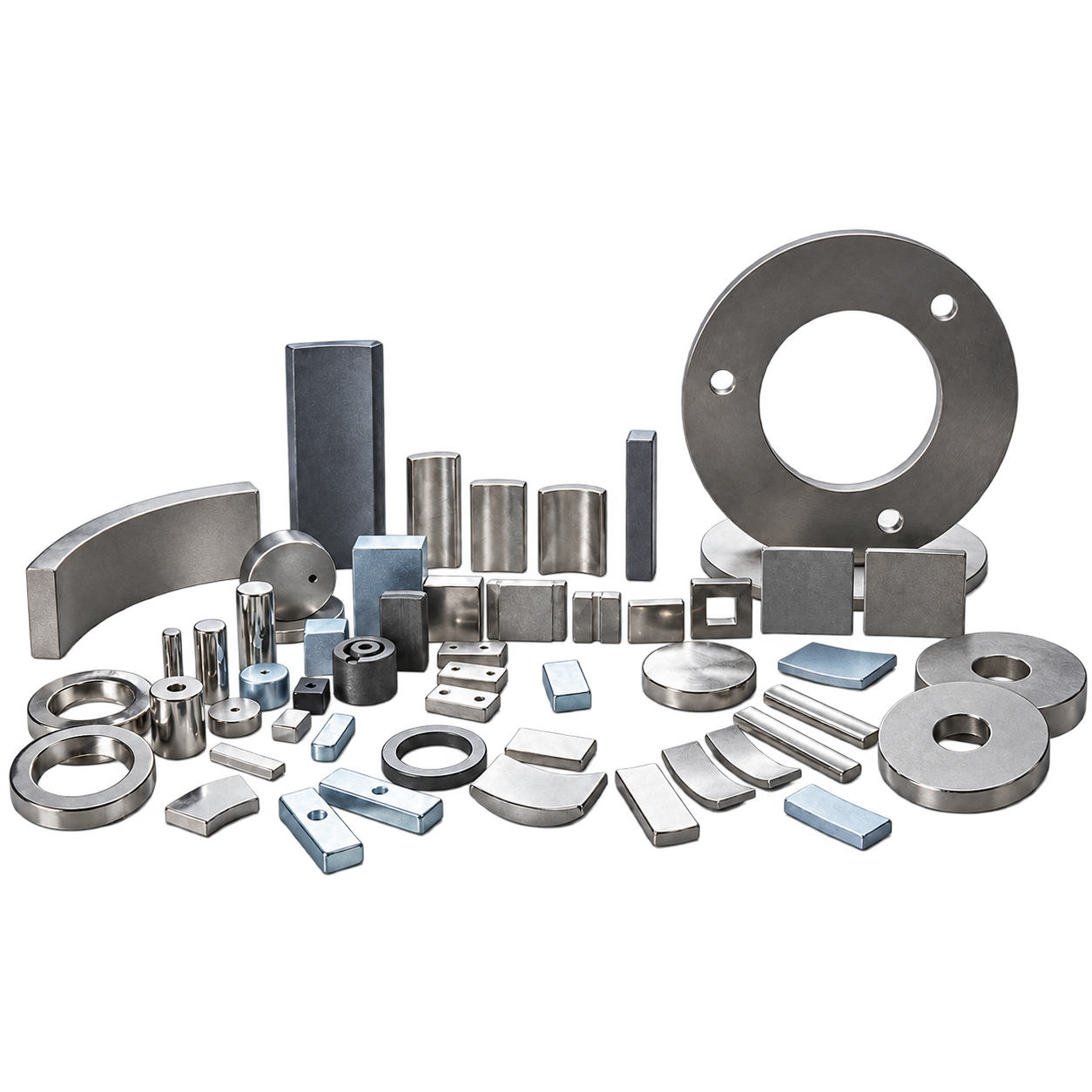 PRODUCTNdFeB
Neodymium iron boron (ndfeb) magnets are currently the most powerful magnets. They are produced by powder pressing, sintering, and processing. Because the finished product is prone to oxidation, it requires surface coating treatment, which can be achieved through various methods such as zinc plating, color zinc plating, nickel plating, gold plating, electroless nickel plating, pyrelin plating, and epoxy resin plating.
Ndfeb permanent magnets possess high remanence, high coercivity, high energy product, and high performance, and are easily processed into various sizes, making them widely used in various fields, especially in modern high-tech industries. Due to their extremely high coercivity and energy product, they exhibit superior performance compared to other permanent magnets, particularly in operating environments below 200 degrees Celsius. -
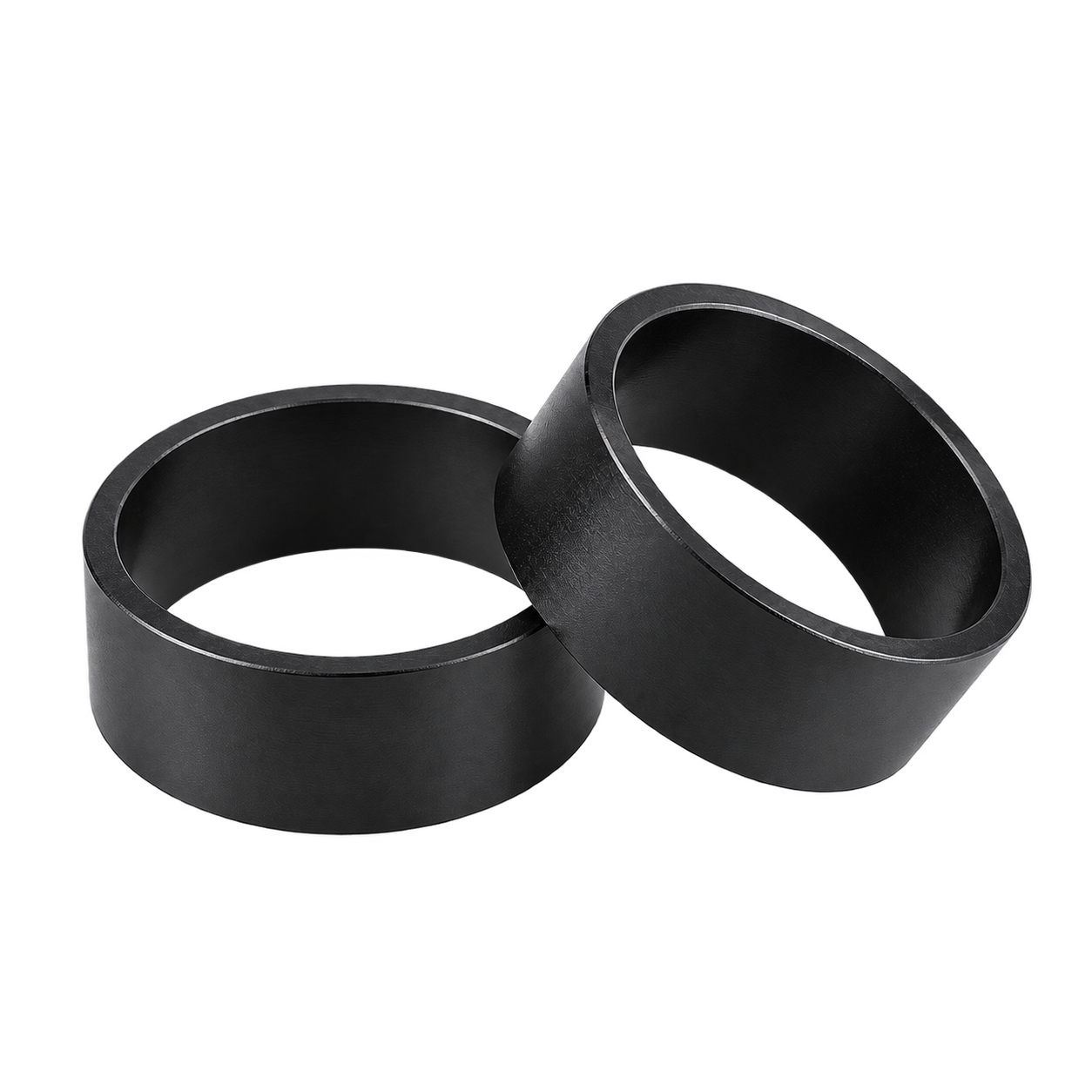 PRODUCTMQ
Bonded NdFeB magnets are primarily made by mixing NdFeB alloy powder with epoxy resin and then pressing it. They possess the following characteristics:
1. High magnetic properties: Magnetic properties fall between those of sintered NdFeB magnets and ferrite magnets, exhibiting good consistency and stability.
2. High dimensional accuracy and high shape freedom: Product shape and dimensions are guaranteed by molds, allowing direct molding into free shapes such as rings, tiles, and blocks, without the need for sintering or post-machining.
3. Excellent corrosion resistance: After electrophoretic coating or some special treatments, they can be used for extended periods in everyday or harsh environments.
4. Flexible and diverse magnetization: Magnetic poles can be magnetized into multi-pole, oblique, and radial configurations; magnetized surfaces can be inner circles, outer circles, end faces, or composite magnetization; waveforms can be square waves or sine waves.
Bonded NdFeB magnets are mainly used in various micro-motors, such as spindle motors, stepper motors, synchronous motors, dc motors, and brushless dc motors, and are also widely used in various sensor devices. It can partially replace sintered NdFeB magnets and ferrite magnets, making the motor assembly process simpler, more reliable, lower in cost, and more efficient.
-
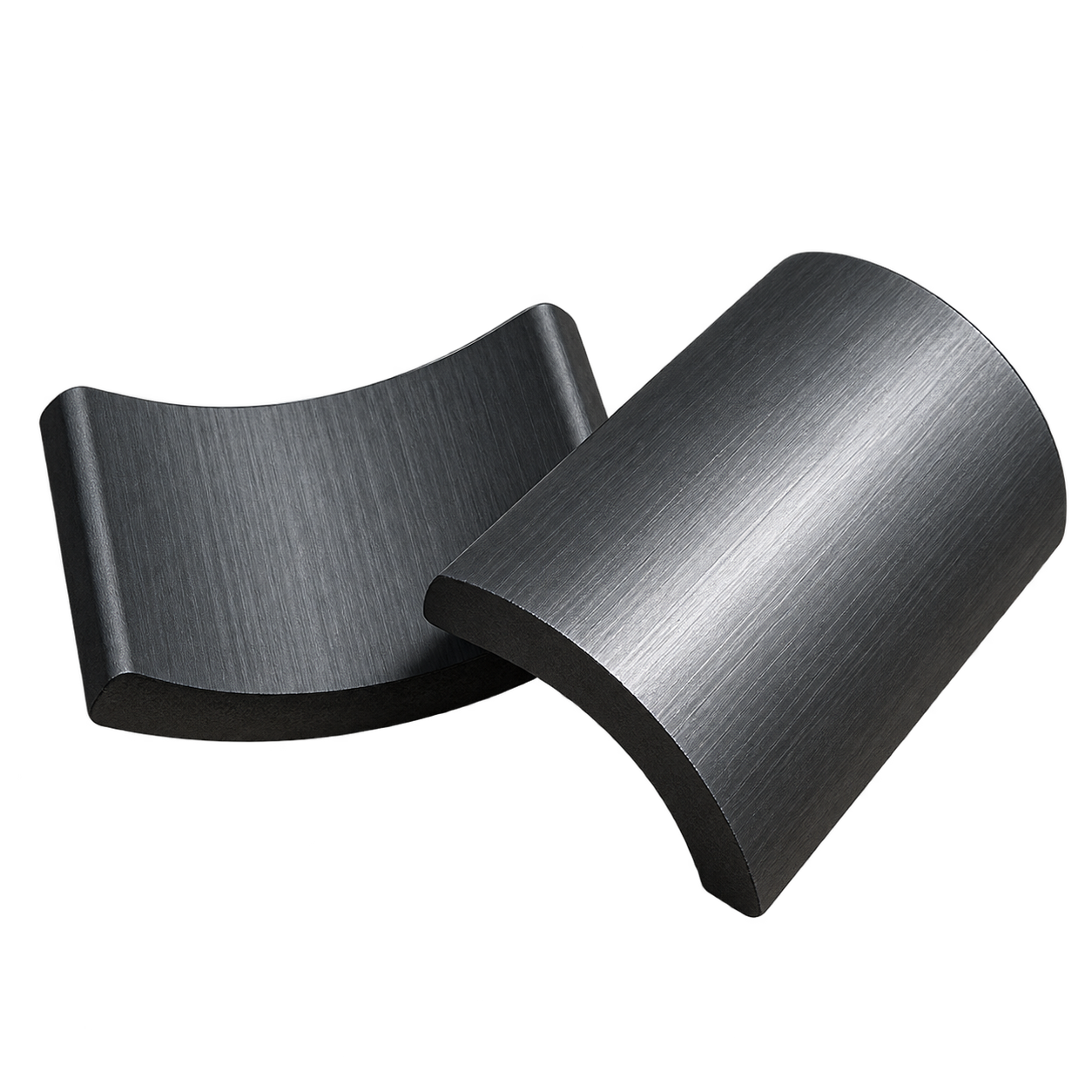 PRODUCTFerrite
Iron oxide is produced using powder metallurgy and can be divided into two types: anisotropic and isotropic. Isotropic sintered iron oxide permanent magnets can be magnetized in different directions, offering greater freedom, but their magnetic properties are weaker. Anisotropic sintered iron oxide permanent magnets, on the other hand, are produced with a fixed axial or radial orientation. Once oriented, the magnet can only be magnetized in the predetermined direction and cannot be changed. However, they possess relatively stronger magnetic properties and higher magnet retention, making them the mainstream in the current iron oxide magnet market.
Because the main raw material is oxide, it is not easily corroded and has high-temperature resistance, allowing operation from -40℃ to +200℃. Therefore, iron oxide permanent magnets are widely used in automobiles (such as starter motors, windshield wipers, automatic seats, automatic sunroofs, oil pumps, fans, power steering motors, etc.), motorcycles, home appliances (air conditioners, washing machines, juicers, fans, water purifiers, etc.), power tools, fitness equipment, and other fields. -
 PRODUCTSmCo
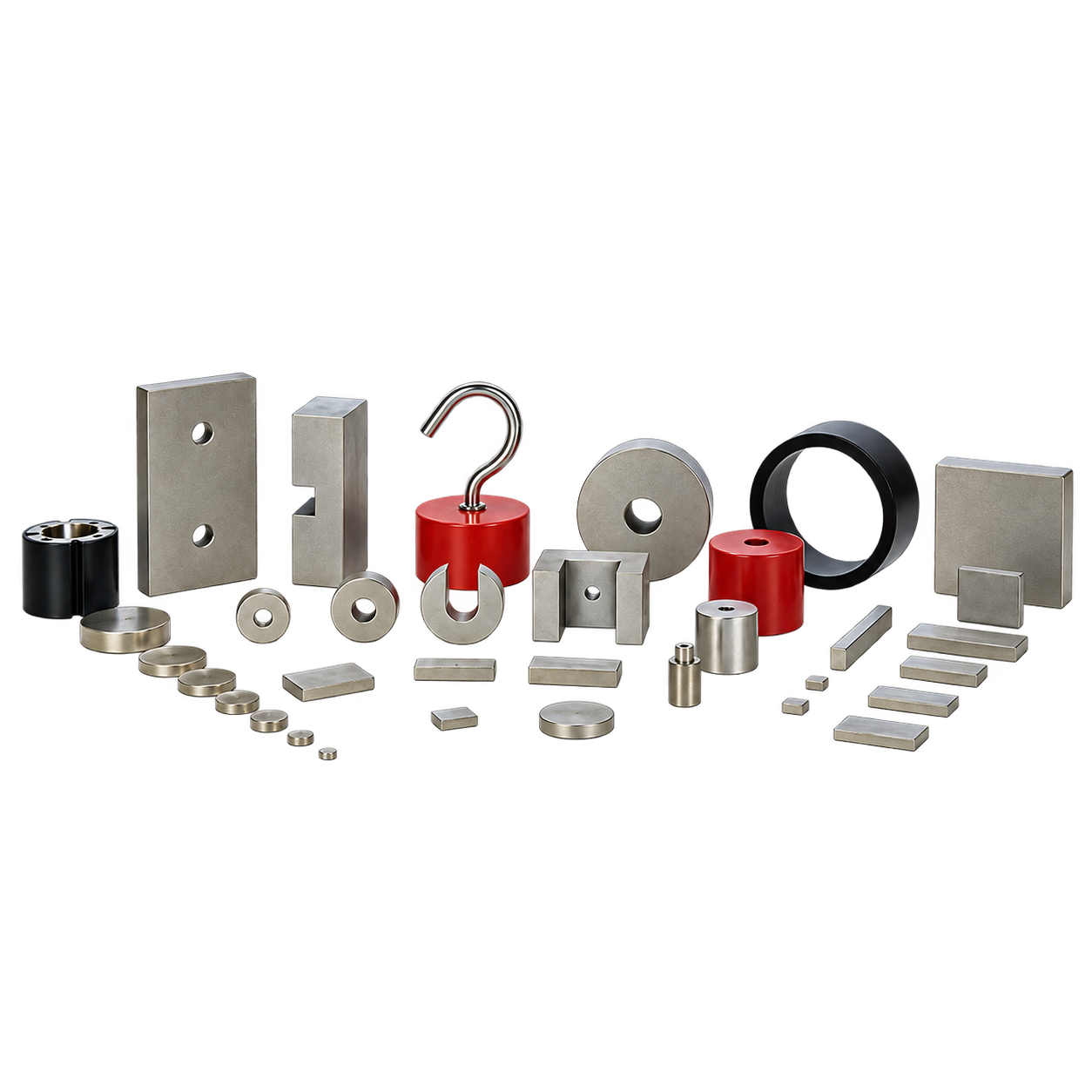
Samarium cobalt is a rare-earth magnet. It is a magnetic tool material made by mixing samarium, cobalt and other rare-earth metallic materials, melting them into an alloy, and then crushing, pressing and sintering it. It has a high magnetic energy product, an extremely low temperature coefficient, and a maximum operating temperature of up to 350℃. It is not limited to negative temperatures. When the operating temperature is above 180℃, its maximum magnetic energy product (BHmax), coercivity, temperature stability and chemical stability all exceed those of neodymium iron boron permanent magnet materials. -
 PRODUCTInjection-Molded Magnets
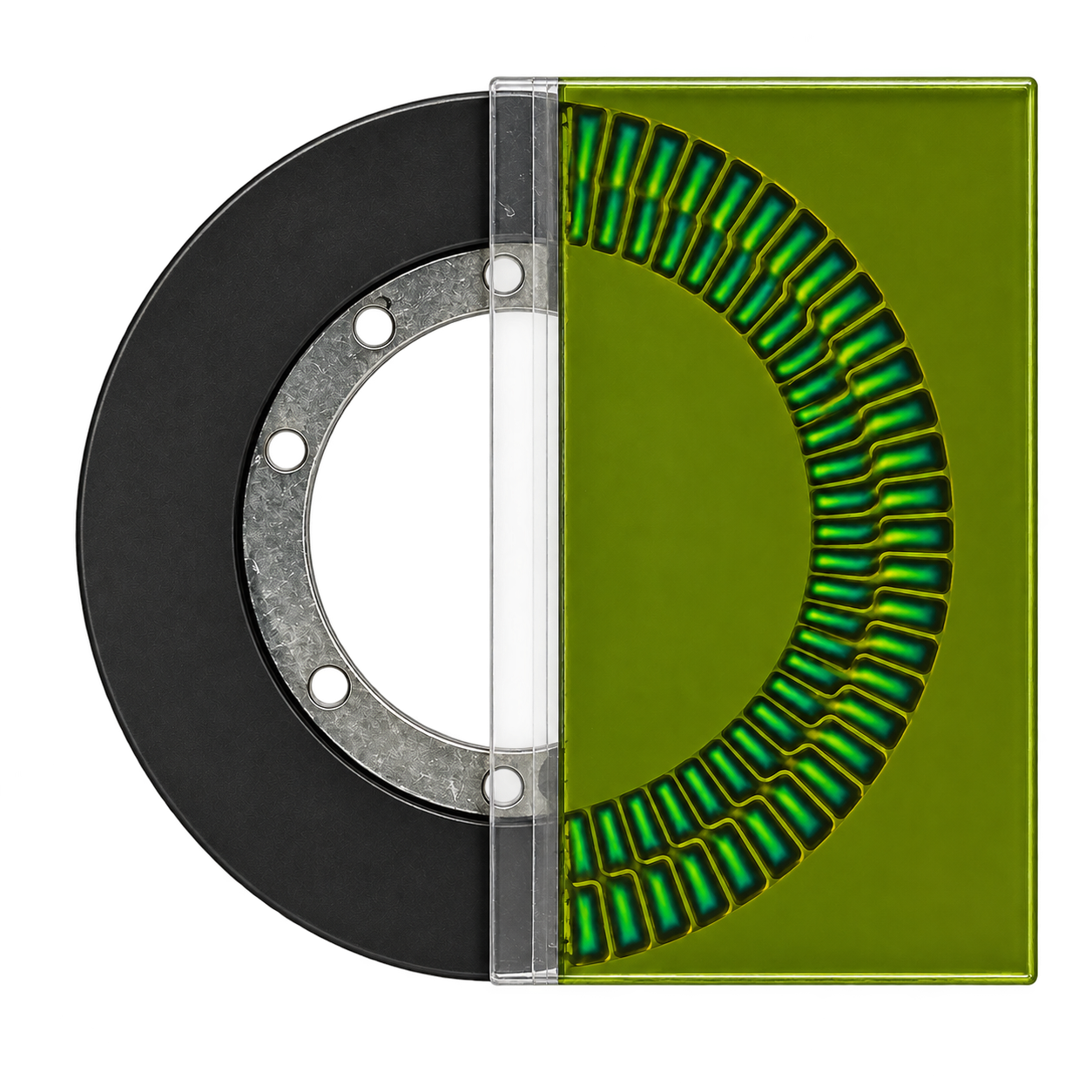
Injection-molded magnets (referred to as plastic magnets) are bonded magnets produced by mixing thermoplastic resin and magnetic powder into granules bonded magnets produced by injection molding. -
 PRODUCTAlNiCo
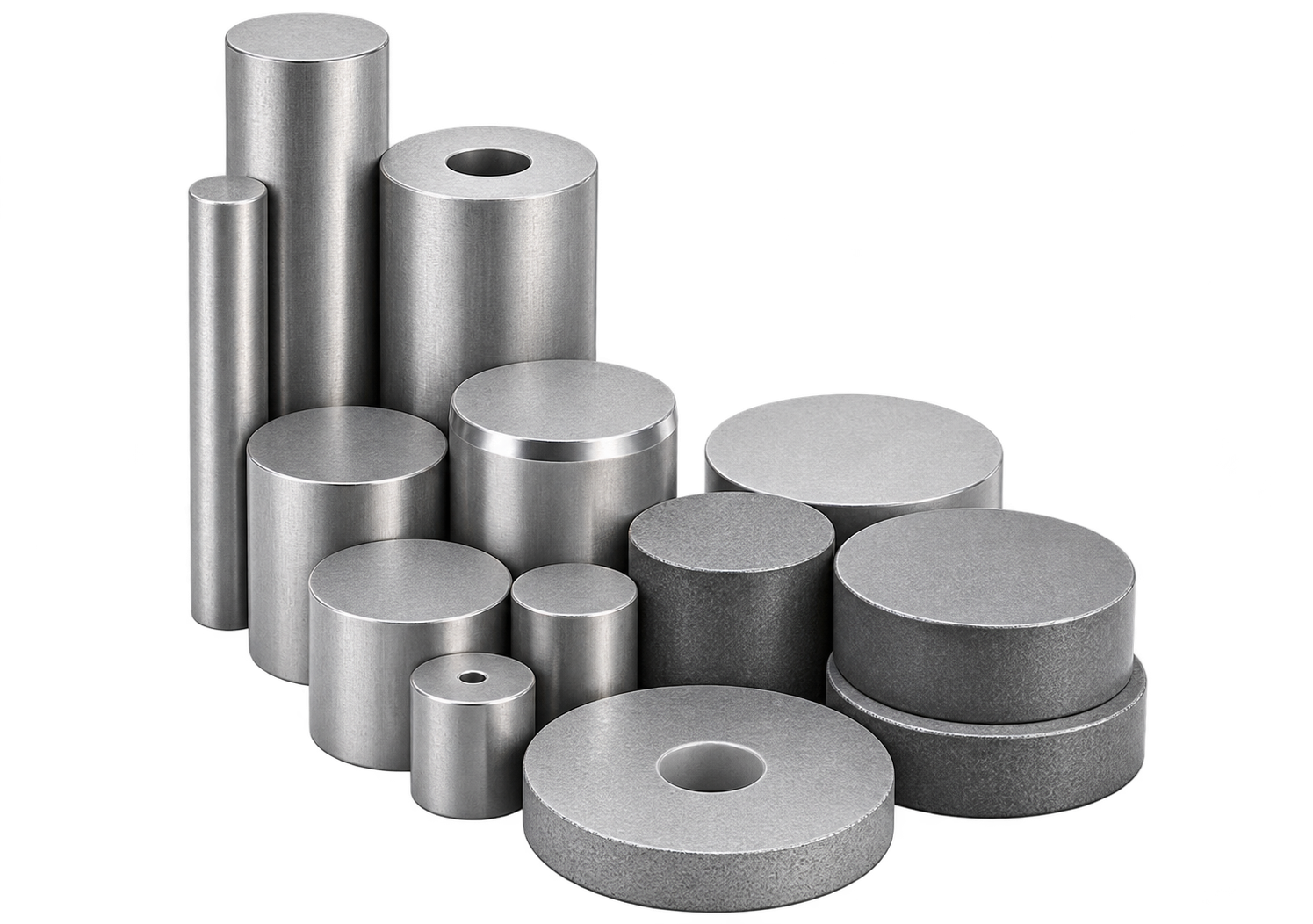
Permanent magnets made of AlNiCo are iron alloys containing aluminum (Al), nickel (Ni), cobalt (Co), and small amounts of other magnetically enhancing components in addition to iron.
AlNiCo alloys exhibit high coercivity and a high Curie temperature. They are hard yet brittle, making them impossible to cold work; therefore, they must be manufactured using casting or sintering processes.